


Decoding Kamal Haasan’s Most Iconic Heartbreak Songs - Kadavul Amaithu Vaitha Medai & Unna Nenachen

In the world of Tamil cinema, few actors can mask profound grief with a smile as convincingly as Kamal Haasan. While he has played a multitude of diverse roles, two specific songs—released 15 years apart—stand out as structural twins. Whether you are a "70s Kid" or an "80s Kid," you likely have one of these tracks etched into your soul.
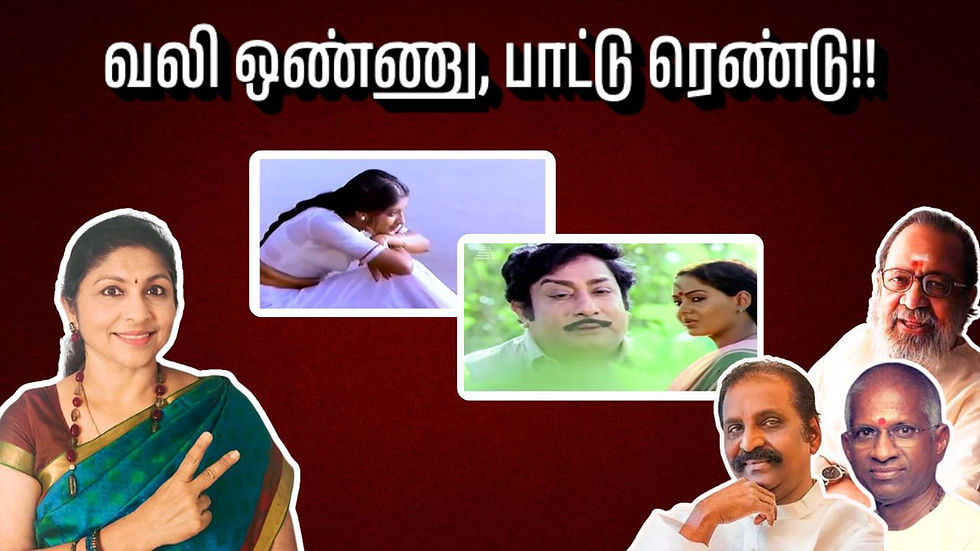
Today, we are decoding the situational, lyrical, and musical parallels between "Kadavul Amaithu Vaitha Medai" (Aval Oru Thodarkathai, 1974) and "Unna Nenachen Paatu Padichen" (Apoorva Sagodharargal, 1989).
The Identical Premise: An Unexpected Audience
Both songs share a strikingly similar cinematic situation:
The Misunderstanding: Kamal’s character falls in love, mistakenly believing the woman returns his feelings.
The Reality Check: He discovers she is marrying someone else—often realizing he was merely a friend or a "comfort" to her.
The Performance: In a cruel twist of fate, he is the designated "entertainment" at her wedding reception.
The Mask: He must suppress his tears and perform with a "poli punnagai" (fake smile) for the very woman who broke his heart.
Musical Mastery: The Raga of Resignation for Heartbreak Songs
Interestingly, both Mellisai Mannar M.S. Viswanathan (MSV) and Isaignani Ilaiyaraaja chose the Natabhairavi scale for these compositions. Known as the "Raga of Resignation," Natabhairavi doesn't sound angry; it sounds heavy.
MSV’s Approach (1974): MSV created a modern "Kaalatchebam" or storytelling act. It’s filled with mimicry—parrots, elephants, and even the sound of anklets—all performed vocally. The music feels like a jolly show until you listen to the lyrics.
Ilaiyaraaja’s Approach (1989): This is a full-throttle pathos melody. Using sweeping strings and wind pipes, Raaja ensures the melancholy is felt from the very first note of the orchestration.
Lyrical Symmetry: The "Parrot" Metaphor
It is fascinating to see how Kaviarasu Kannadasan and Vaali used similar metaphors to describe a man's misplaced hope.
Kannadasan wrote: "Appavi aan kili thappaga ninaithathu..." (The innocent male parrot thought wrongly).
Vaali echoed this sentiment 15 years later: "Thappu kanakku pottu thavithen..." (I struggled, having calculated the wrong sum).
Both heartbreak songs use the metaphor of a stage play. Like Shakespeare’s famous line, "All the world's a stage," these songs suggest that the protagonists are simply actors who realized their roles were different from what they imagined.
The Supreme Voice Actor: SPB
While SPB’s voice matured between 1974 and 1989, his ability to "voice act" remained unparalleled. In the earlier track, he balances energy and irony. In the later track, he brings the audience to tears, specifically in the haunting lines of the charanam.
Two Eras, One Emotion
In Aval Oru Thodarkathai, a young Kamal used a "Vikatakavi" persona—props, vibhuti, and flexible dance moves—to hide his pain. By Apoorva Sagodharargal, his character "Appu" was physically limited by his height, forcing Kamal to convey every ounce of that same tragedy through his eyes alone.
The music changed, the directors changed, and the actor evolved—but the "Noble Love Failure" remains a timeless experience in Tamil cinema.
Which of these two classics speaks to your heart more? Let us know in the comments!

Comments